
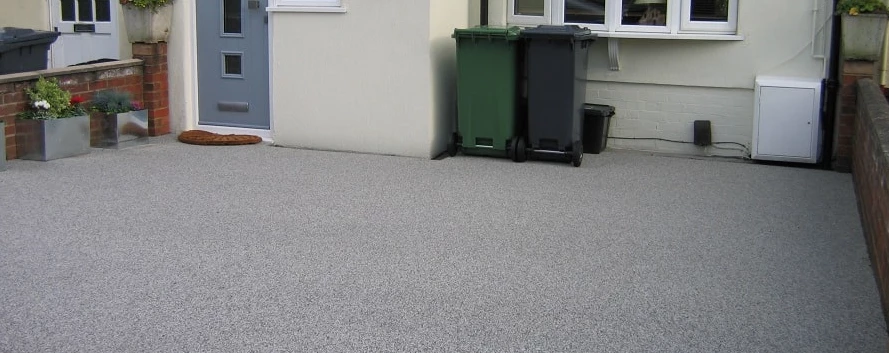
A Decorative Resin Bound Pathway for a Commercial Property in Worcestershire
Get in TouchA commercial property in Worcestershire approached us to improve one of its external pedestrian routes. The existing pathway had become worn and visually inconsistent, and the client wanted to create a more welcoming approach for staff, visitors and customers.
The brief was relatively straightforward, but there were several practical considerations to work through before installation could begin.
The new pathway needed to complement the surrounding building, provide a comfortable walking surface and withstand the regular foot traffic associated with a commercial environment.
During our initial discussions, the client explained that appearance was important, but they were equally concerned about keeping disruption to a minimum.
The route needed to remain a practical part of the site's external layout, so we discussed how the works could be scheduled and whether the installation could be divided into manageable stages if access requirements made that necessary.
We recommended a decorative resin bound finish, subject to the suitability of the underlying construction. This would allow us to create a continuous aggregate surface with a clean, modern appearance while paying close attention to the pathway's edges, levels and drainage.
Selecting the Right Aggregate Blend
One of the first decisions was the appearance of the finished pathway. Resin bound surfacing is available in a range of natural aggregate colours, allowing the final blend to be selected to complement nearby paving, brickwork and landscaping.
We discussed the options with the client, explaining how lighter aggregates can create a brighter, more open feel, while darker or mixed-colour blends may help disguise everyday dirt and blend into existing external finishes.
For a commercial property, consistency was particularly important. The pathway needed to look appropriate alongside the building rather than draw attention away from it. We therefore focused on a practical decorative finish that would sit comfortably within the wider site.
We also explained the difference between resin bound and resin bonded surfacing. With a resin bound system, the aggregate is mixed with the resin binder before being laid, producing a bound, relatively smooth finish. Resin bonded surfacing uses a different application method, with aggregate scattered onto a resin-coated substrate.
For this project, resin bound surfacing was the preferred approach because of the continuous decorative finish required.
The Preparation Behind the Finished Surface
Before laying the new pathway, we assessed the existing substrate and the condition of the proposed installation area. This was an essential step because the performance of a resin bound surface depends heavily on the stability and suitability of the base beneath it.
Where an existing concrete or asphalt substrate is sound, appropriately level and compatible with the selected system, it may provide a suitable foundation. However, loose material, significant cracking, movement or inadequate drainage can require remedial work before a new surface is installed.
Our preparation programme was therefore based on the condition of the pathway rather than assuming that the existing construction could automatically be covered.
The working area was prepared and cleaned, with attention given to the edges and the points where the new pathway would meet the surrounding surfaces. We also reviewed the finished levels to help avoid awkward transitions that could affect pedestrian movement or leave unwanted changes in height.
Drainage formed part of these checks. Although suitable resin bound systems can be permeable, the complete installation must be designed correctly for water to drain effectively. The underlying base and any existing drainage arrangements remain important, particularly where water could otherwise collect against the building or along the pathway.
Laying the Resin Bound Pathway
Once the substrate was ready, we began the main installation.
The selected dried aggregates were combined with the specified resin binder using a mechanical mixer. This stage requires careful control to ensure the stones are evenly coated and the mixture is consistent throughout each batch.
Our installers then transferred the material to the pathway and spread it across the prepared area. Using suitable hand tools, they worked the mixture to the specified depth, maintaining an even finish and carefully blending adjoining sections to minimise visible joints.
Narrow pathways can require particularly careful handling around corners, changes in direction and fixed features. Small inconsistencies become more noticeable where a surface is viewed at close range, so we paid particular attention to the edges and the points where the pathway met existing paving.
The working sequence also needed to account for the resin's limited pot life. Once mixed, the material must be laid and finished within the product's specified working window. Our team coordinated the mixing and laying operations to keep the material workable and maintain consistency across the installation.
Weather conditions were monitored throughout the programme. Resin bound products have specific requirements relating to temperature, moisture and curing, and unsuitable conditions can affect the quality of the finished surface. Planning around the forecast helped us avoid treating speed as more important than installation quality.
Managing the Commercial Site
Because the pathway served a commercial property, access and communication remained important throughout the works.
We kept the client informed about progress and discussed the need to restrict access to the freshly laid surface while it cured. This allowed them to consider how pedestrians could be directed around the work area and helped reduce the risk of someone walking across the installation prematurely.
For a project of this scale, the physical laying may be completed within a day once the preparation is finished, although the overall programme can extend across several days depending on the pathway's size, substrate condition and any remedial work required. The surface must then be left undisturbed for the curing period specified by the manufacturer, with access restrictions adjusted to suit the actual product and weather conditions.
Once the installation was complete, we checked the consistency of the finish, the perimeter detailing and the transitions to the surrounding surfaces. We also made sure the working area was left tidy and that the client understood when the pathway could be returned to normal use.
A Practical Upgrade for Worcestershire
The completed pathway gave the commercial property a refreshed external route, combining decorative aggregate with a consistent finish designed around everyday pedestrian use. The project demonstrated the value of planning the installation as a complete system, from substrate preparation through to curing and final checks.
Resin bound surfacing can be an effective choice for commercial pathways, entrances and other pedestrian areas, provided the selected system and underlying construction are suitable for the site. Regular cleaning and periodic inspections will also help maintain its appearance and identify any developing issues early.
If your commercial premises would benefit from a new resin bound pathway or an upgrade to existing external surfacing, we can help assess the area, discuss decorative options and plan the installation around your operational requirements. We carry out resin surfacing projects across the UK, helping businesses create attractive, practical external spaces for staff and visitors.